
Blog
Mineral Sunscreen: A Simple, Honest Guide for Everyday Use

If sunscreen has ever made your skin sting, break out, or feel greasy, you are not alone. I avoided sunscreen for years because every bottle I tried either burned my eyes or made my face look shiny and uneven. Things changed when I finally understood mineral sunscreen and how to use it the right way.
No hype. No confusing science talk. Just practical help based on experience, expert advice, and what actually works day to day.
What Is Mineral Sunscreen
Mineral sunscreen is a type of sunscreen that sits on top of the skin and blocks UV rays before they can cause damage. It uses mineral ingredients instead of chemical filters.
The two main active ingredients are:
- Zinc oxide
- Titanium dioxide
These minerals reflect and scatter UV rays away from your skin.
Unlike chemical sunscreens, mineral sunscreen starts working right away. There is no wait time after applying.
How Mineral Sunscreen Is Different From Chemical Sunscreen
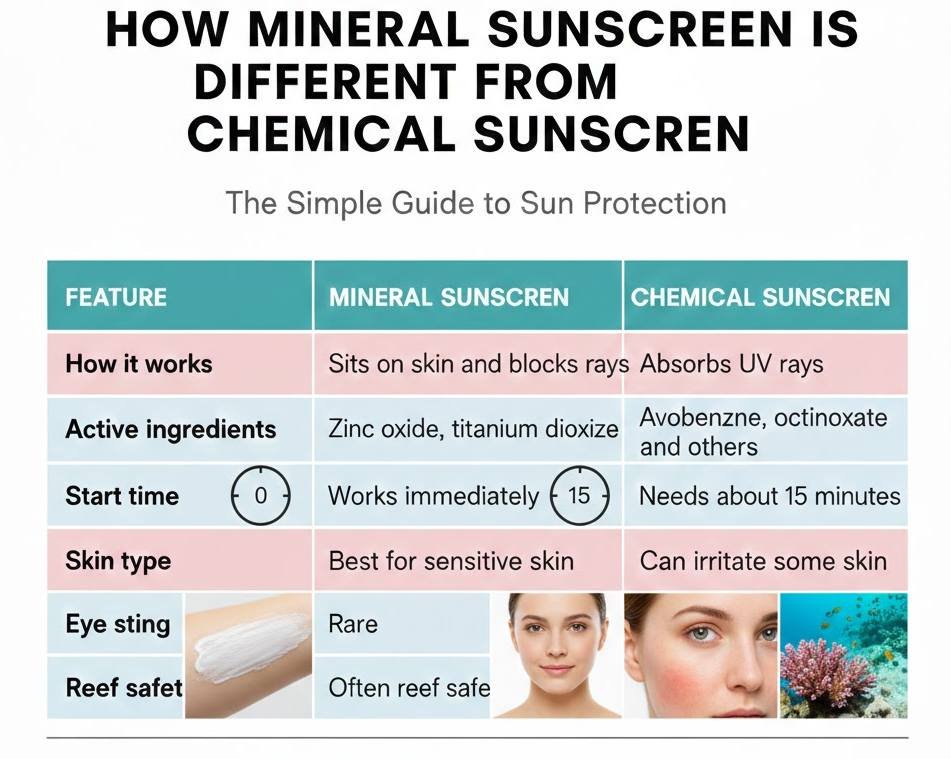
This is one of the most confusing topics, so let’s keep it simple.
Key Differences at a Glance
| Feature | Mineral Sunscreen | Chemical Sunscreen |
|---|---|---|
| How it works | Sits on skin and blocks rays | Absorbs UV rays |
| Active ingredients | Zinc oxide, titanium dioxide | Avobenzone, octinoxate and others |
| Start time | Works immediately | Needs about 15 minutes |
| Skin type | Best for sensitive skin | Can irritate some skin |
| Eye sting | Rare | Common |
| Reef safety | Often reef safe | Some harm coral reefs |
A dermatologist once told me, “If your skin reacts easily, mineral sunscreen is usually the safest place to start.” That advice turned out to be true for me.
Why Many People Choose Mineral Sunscreen
People do not switch to mineral sunscreen because it is trendy. They switch because it solves real problems.
Common Reasons People Prefer It
- Sensitive or reactive skin
- Rosacea or eczema
- Acne-prone skin
- Pregnancy or breastfeeding
- Eye irritation from regular sunscreen
- Desire for reef-friendly products
I started using mineral sunscreen after chemical formulas made my eyes water during long outdoor days. With mineral sunscreen, that problem disappeared.
Does Mineral Sunscreen Really Protect Your Skin
Yes, when used correctly.
Zinc oxide is one of the few ingredients that protect against both UVA and UVB rays. That means it helps prevent sunburn, early aging, and long-term skin damage.
Dermatologists often recommend mineral sunscreen for children because it is gentle and stable.
The key is applying enough and reapplying when needed.
How to Choose the Right Mineral Sunscreen
Not all mineral sunscreens feel or look the same. Picking the right one makes a big difference.
What to Look For on the Label
- Broad spectrum protection
- SPF 30 or higher
- Zinc oxide is listed as an active ingredient
- Non-nano zinc if reef safety matters to you
- Fragrance-free if you have sensitive skin
Choosing by Skin Type
| Skin Type | What to Look For |
|---|---|
| Oily or acne prone | Lightweight lotion or gel |
| Dry skin | Cream or sunscreen with moisturizing oils |
| Sensitive skin | Minimal ingredients, fragrance free |
| Darker skin tones | Tinted mineral sunscreen |
Tinted mineral sunscreen was a game-changer for me. It reduced white cast and evened out my skin tone without makeup.
Truth About White Cast
This is the biggest complaint about mineral sunscreen. And yes, it can be real.
White cast happens because minerals reflect light. Older formulas were thick and chalky. Newer ones are much better, but technique still matters.
Tips to Reduce White Cast
- Apply in thin layers
- Warm it between your fingers first
- Use tinted mineral sunscreen
- Let it settle for a minute before adding makeup
A makeup artist once shared this tip with me. Apply mineral sunscreen like skincare, not like paint. Gentle pressing works better than rubbing.
How Much Mineral Sunscreen Do You Actually Need
Most people do not use enough sunscreen. I did not either.
General Rule
- Face and neck: About two finger lengths
- Body: About one ounce or a shot glass size
Using too little lowers your protection, even if the SPF is high.
How Often to Reapply Mineral Sunscreen
Even though mineral sunscreen is stable, it still wears off.
Reapply When
- Every two hours outdoors
- After swimming or sweating
- After wiping your face with a towel
Powder mineral sunscreens can help with touch-ups, but they should not replace a whole layer.
Can You Wear Makeup Over Mineral Sunscreen
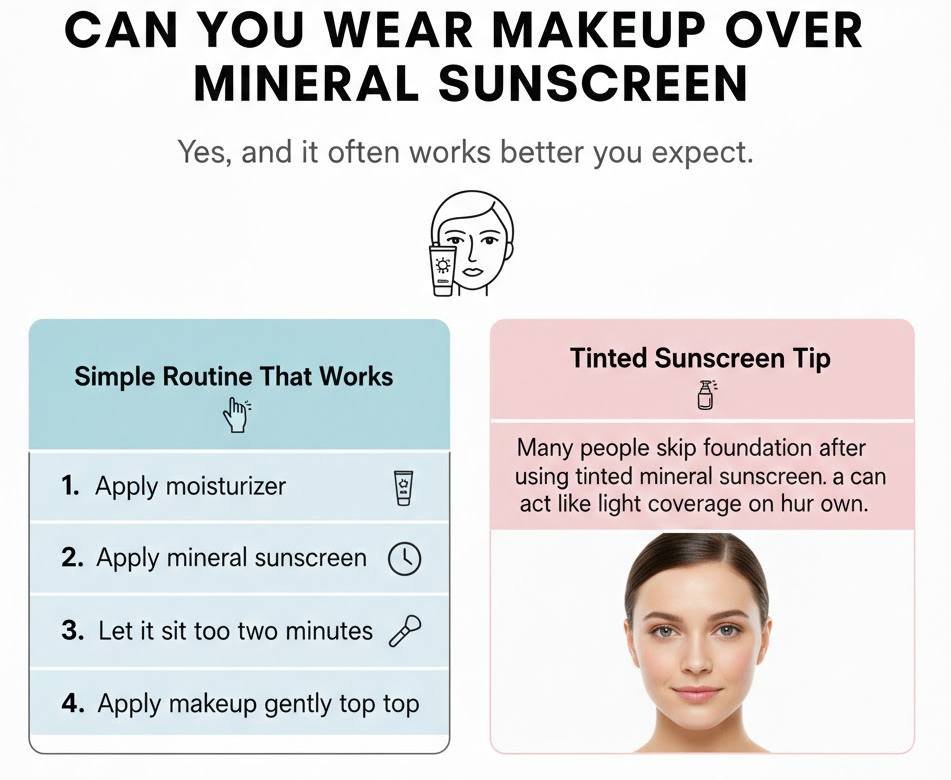
Yes, and it often works better than you expect.
Simple Routine That Works
- Apply moisturizer
- Apply mineral sunscreen
- Let it sit for one to two minutes
- Apply makeup gently on top
Many people skip foundation after using tinted mineral sunscreen. It can act like light coverage on its own.
Is Mineral Sunscreen Safe for Kids and Babies
Mineral sunscreen is often recommended for children because it is gentle and does not absorb into the skin the same way chemical filters do.
For babies under six months, shade and clothing are best. After that, mineral sunscreen with zinc oxide is usually the first choice.
Always check with a pediatrician if you are unsure.
Why I Stuck With Mineral Sunscreen
At first, mineral sunscreen felt harder to use. It took longer to blend and looked heavier than what I was used to.
But after a few weeks, I noticed fewer breakouts, less redness, and no eye irritation. I stopped skipping sunscreen because it no longer felt uncomfortable.
That is when it became a habit instead of a chore.
Common Mistakes People Make With Mineral Sunscreen
| Common Mistake | What Happens | How to Fix It |
|---|---|---|
| Using too little | Applying too little mineral sunscreen reduces protection, even if the SPF is high. | Use enough product to fully cover the skin. For the face and neck, aim for about two finger lengths. |
| Skipping reapplication | Sun protection wears off over time, especially outdoors, with sweat or water exposure. | Reapply every two hours when outside and after swimming or sweating. |
| Rubbing too hard | Aggressive rubbing can remove sunscreen instead of spreading it evenly. | Apply gently and press or smooth the sunscreen onto the skin. |
| Giving up too soon | Some mineral sunscreens need practice to apply well and may look better with proper technique. | Try adjusting how you apply it before switching products. Use thin layers and allow time to settle. |
Is Mineral Sunscreen Better for the Environment
Many mineral sunscreens are labeled reef safe, especially those without nano zinc and harmful additives.
While no sunscreen is perfect for the ocean, mineral sunscreen is generally considered a safer option for marine life compared to some chemical filters.
Frequently Asked Questions About Mineral Sunscreen
| Question | Answer |
|---|---|
| Does mineral sunscreen clog pores? | Most modern mineral sunscreens are non comedogenic, but if you are acne prone, always check the label and ingredient list. |
| Can mineral sunscreen cause breakouts? | It is less likely than chemical sunscreen, but heavier formulas may not suit every skin type. Lightweight options work better for acne prone skin. |
| Does SPF higher than 30 matter? | SPF 30 blocks about 97 percent of UVB rays. Higher SPF gives slightly more protection, but correct application and reapplication matter more. |
| Can I use mineral sunscreen every day? | Yes. Daily use is recommended, even on cloudy days or when indoors near windows. |
Final Thoughts
Mineral sunscreen is not perfect, but for many people, it is the most comfortable and reliable way to protect their skin.
If sunscreen has ever caused irritation, breakouts, or eye stinging for you, mineral sunscreen is worth trying. Take time to find a formula that fits your skin and lifestyle.
Good sun protection is not about finding the fanciest product. It is about finding one you will actually use every day.
