
Blog
Helix Piercing: What to Know Before You Get One

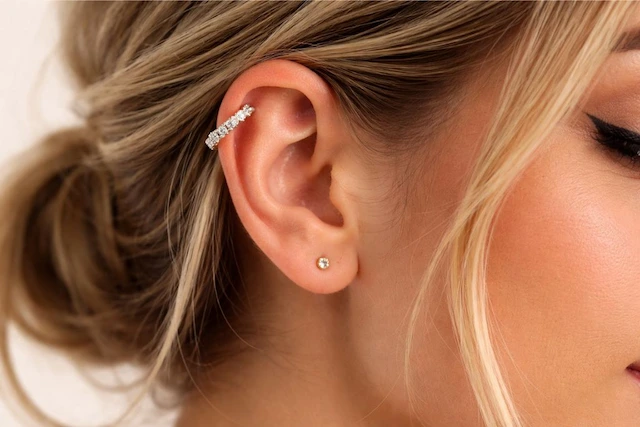
A helix piercing is one of the most popular ear piercings, and for good reason. It looks stylish, works with many jewelry types, and suits almost every ear shape. Still, many people go into it without enough real information. That’s when pain, slow healing, or infections happen.
Its helps you decide if a helix piercing is right for you and how to take care of it properly. I’ll share practical advice, common mistakes, and real examples so you know what to expect, not just the basics.
What Is a Helix Piercing
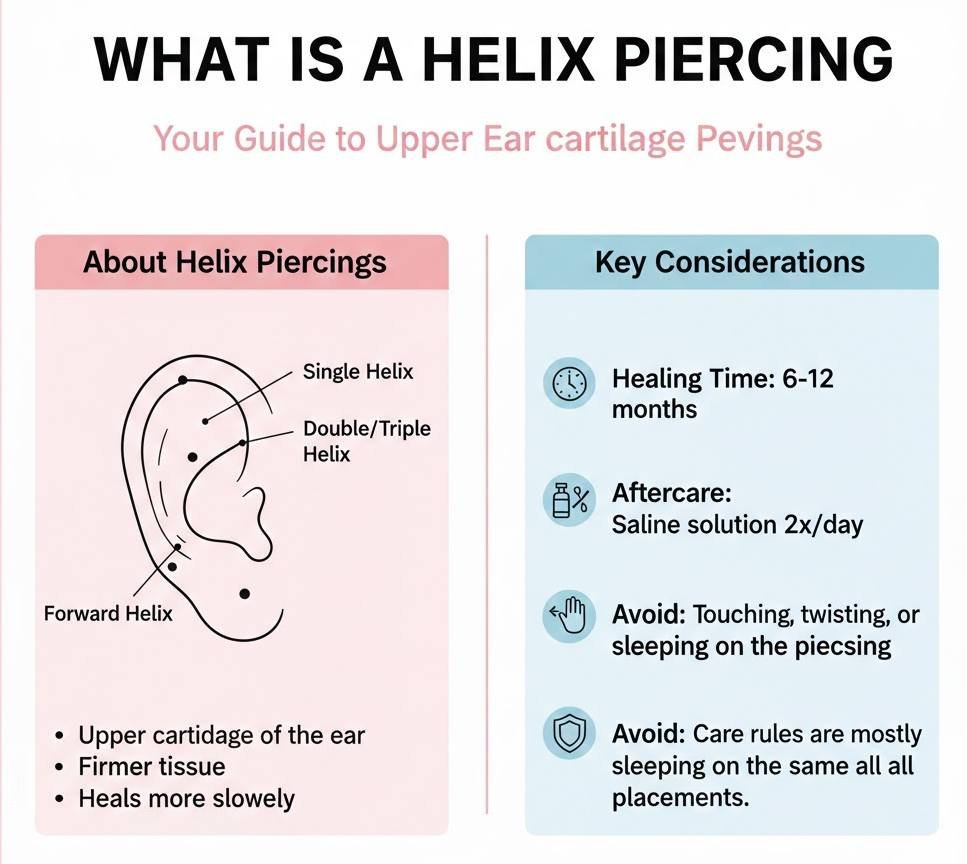
A helix piercing goes through the upper cartilage of the ear. Unlike a regular lobe piercing, cartilage is firmer and heals more slowly.
You can get:
- Single helix piercing
- Double or triple helix
- Forward helix near the face
Each placement has a slightly different feel and healing time, but the care rules are mostly the same.
Does a Helix Piercing Hurt
This is usually the first question people ask.
Short answer: yes, but it’s manageable.
Most people describe the pain as:
- A sharp pinch
- Pressure that lasts a few seconds
- Mild soreness afterward
Compared to a lobe piercing, it hurts more. Compared to more intense piercings, it’s easier. Pain tolerance varies, but many say the anticipation is worse than the actual piercing.
A professional piercer once told me, “If you can handle a flu shot, you can handle a helix piercing.”
Healing Time: What Most People Don’t Expect
This is where many articles get it wrong or oversimplify.
A helix piercing does not heal fast.
Realistic Healing Timeline
- First 2 weeks: soreness, swelling, warmth
- 1 to 3 months: still tender, looks healed, but isn’t
- 6 to 9 months: more profound healing
- Up to 12 months: fully healed for many people
One common mistake is changing jewelry too early. Even if it looks fine on the outside, the inside may still be healing.
Choosing the Right Jewelry Matters More Than You Think
The jewelry you start with can make or break your experience.
Best Starter Jewelry for a Helix Piercing
- Flat back studs
- Small hoops with enough space for swelling
- Titanium or surgical-grade steel
- Solid gold, not gold-plated
Avoid cheap metals. Nickel allergies are more common than people think and can cause long-term irritation.
Size Tip from Piercers
A slightly longer post at the start helps with swelling. You can downsize later once healing improves.
Helix Piercing Aftercare That Actually Works
Aftercare doesn’t need to be complicated. It needs to be consistent.
Simple Daily Care Routine
- Clean twice a day with sterile saline
- Wash your hands before touching
- Pat dry gently with a clean paper towel
- Avoid twisting or spinning jewelry
That’s it. No alcohol. No hydrogen peroxide. These dry out healing tissue and slow recovery.
Sleeping With a Helix Piercing
This is a real challenge, especially for side sleepers.
Helpful tips:
- Sleep on the opposite side
- Use a travel pillow and place your ear in the hole
- Change pillowcases often
Many people don’t realize how much pressure during sleep affects healing. I’ve seen piercings heal faster just by changing sleep position.
Common Problems and How to Handle Them
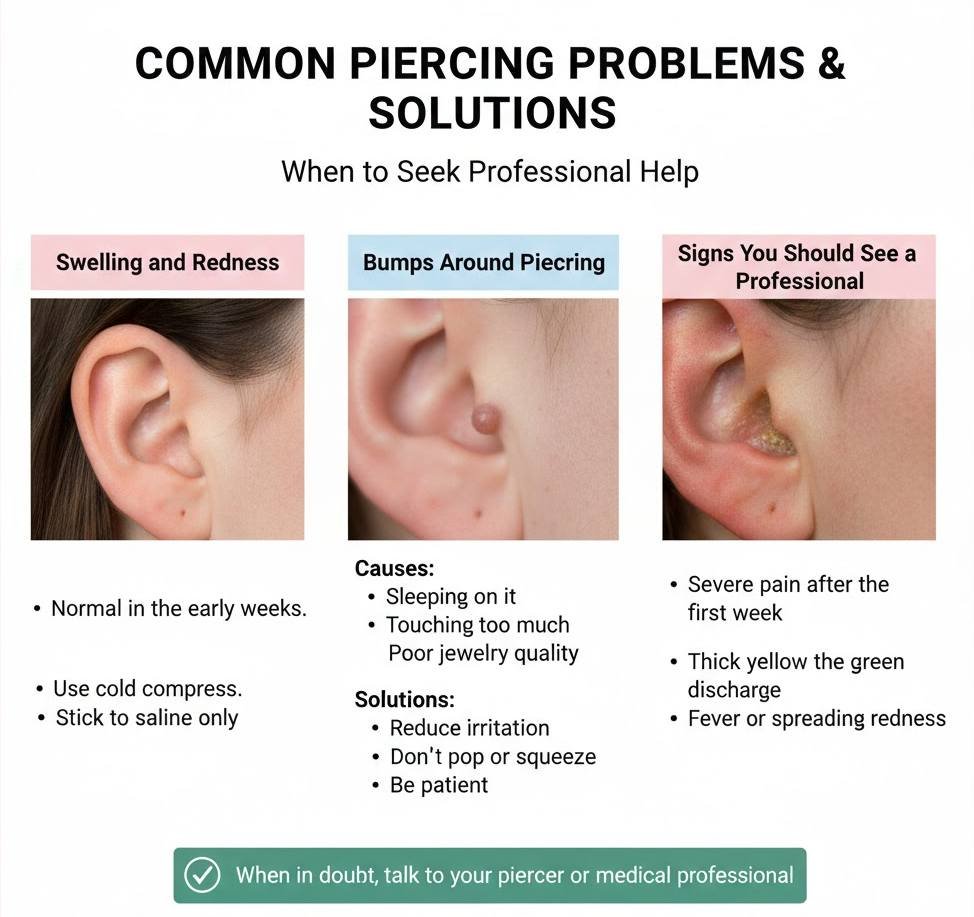
Swelling and Redness
Normal in the early weeks.
- Use a cold compress near, not directly on, the piercing
- Stick to saline only
Bumps Around the Piercing
These are common and often not infections.
Causes include:
- Sleeping on it
- Touching too much
- Poor jewelry quality
Solution:
- Reduce irritation
- Don’t pop or squeeze
- Be patient
Signs You Should See a Professional
- Severe pain after the first week
- Thick yellow or green discharge
- Fever or spreading redness
When in doubt, talk to your piercer or a medical professional.
Real Experience: What I Wish I Knew Earlier
When I got my first helix piercing, I thought it was healed after two months. I changed the jewelry and slept on it without thinking. Within days, it became sore and swollen again.
What fixed it:
- Switching back to a flat back stud
- Saline cleaning only
- Avoiding pressure for several weeks
The lesson: healing isn’t linear. Even when it feels fine, it still needs care.
Helix Piercing vs Other Ear Piercings
Here’s a quick comparison to help you decide.
| Piercing Type | Pain Level | Healing Time | Difficulty |
|---|---|---|---|
| Lobe | Low | 6 to 8 weeks | Easy |
| Helix | Medium | 6 to 12 months | Moderate |
| Tragus | Medium | 6 to 12 months | Moderate |
| Industrial | High | 12 months or more | Hard |
A helix piercing sits in the middle. Stylish but requires patience.
How Much Does a Helix Piercing Cost
Prices vary by location and studio.
Typical range:
- Piercing fee: 30 to 70 dollars
- Jewelry: 20 to 100 dollars
Higher cost often means:
- Better hygiene
- Safer materials
- More experienced piercers
Saving money here can cost you more later if complications happen.
Expert Advice on Long-Term Care
A licensed piercer shared this advice:
“Most helix piercing problems come from overdoing aftercare or touching it too much. Clean it, leave it alone, and let your body do the work.”
That simple mindset helps avoid many issues.
When Can You Change Helix Jewelry
Most piercers recommend waiting:
- At least 3 to 4 months for downsizing
- 6 months or more for style changes
If you’re unsure, ask a professional to change it for you. Many studios do this for free or a small fee.
Is a Helix Piercing Worth It
If you like the look and are willing to be patient, yes.
It’s not a low-effort piercing, but it’s also not extreme. With proper care, most people heal without major issues and enjoy the look for years.
Final Thoughts
A helix piercing is an excellent choice if you want something stylish but not over the top. The key is realistic expectations. Healing takes time. Care matters. Jewelry quality matters even more.
Go to a professional, follow simple aftercare, and don’t rush the process. Do that, and your helix piercing will likely heal well and look great long term.
